There's a version of this story that sounds rational in retrospect. The one where we identified a gap in the Parvati Valley hospitality market, assessed the footfall, projected the returns, and built accordingly. That story is false.
The real story is stranger and less justifiable. It starts with a place that got under someone's skin and refused to leave — even after every sensible person said building there was impossible.
The First Visit
Tosh isn't a place you stumble into. You have to want to get there. The last stretch is a walk — no road, no vehicle access to the village itself. In 2006, when Musée Living's founders first made that walk, Tosh had maybe a handful of visitors a season. The infrastructure was minimal. The views were immense. The silence was the kind that makes you stop mid-sentence and just... stop.
The thought that occurred wasn't "this could be a business." It was simpler and more stubborn: someone should build something permanent here that does this place justice.
What Building Here Actually Means
Every material that went into StonedAge had to be carried up on foot or mule from Barshaini. Every bag of cement. Every beam. Every tile, fixture, and tool. There is no road to Tosh village — which means there is no truck, no crane, no easy logistics of any kind. The construction timeline stretched across seasons and years, not quarters.
The local labor was partly the village itself — families who knew the terrain and could carry loads at altitude that would flatten most professional construction crews. The stone used in the walls came from the mountain. The wood from responsibly sourced deodar. The design emerged from what was available, not from a mood board.
"We didn't build StonedAge the way you build hotels. We built it the way the village was built — material by material, season by season, over years."
— Prateek, Co-Founder, Musée LivingThe Name and the Aesthetic
StonedAge was never going to be a boutique hotel with neutral linens and a curated playlist. The name came first, and the aesthetic followed it. 8000 BC. The era before architecture was a profession, when spaces were made for survival and shelter and the basic human need to have a fire in the center and a roof overhead.
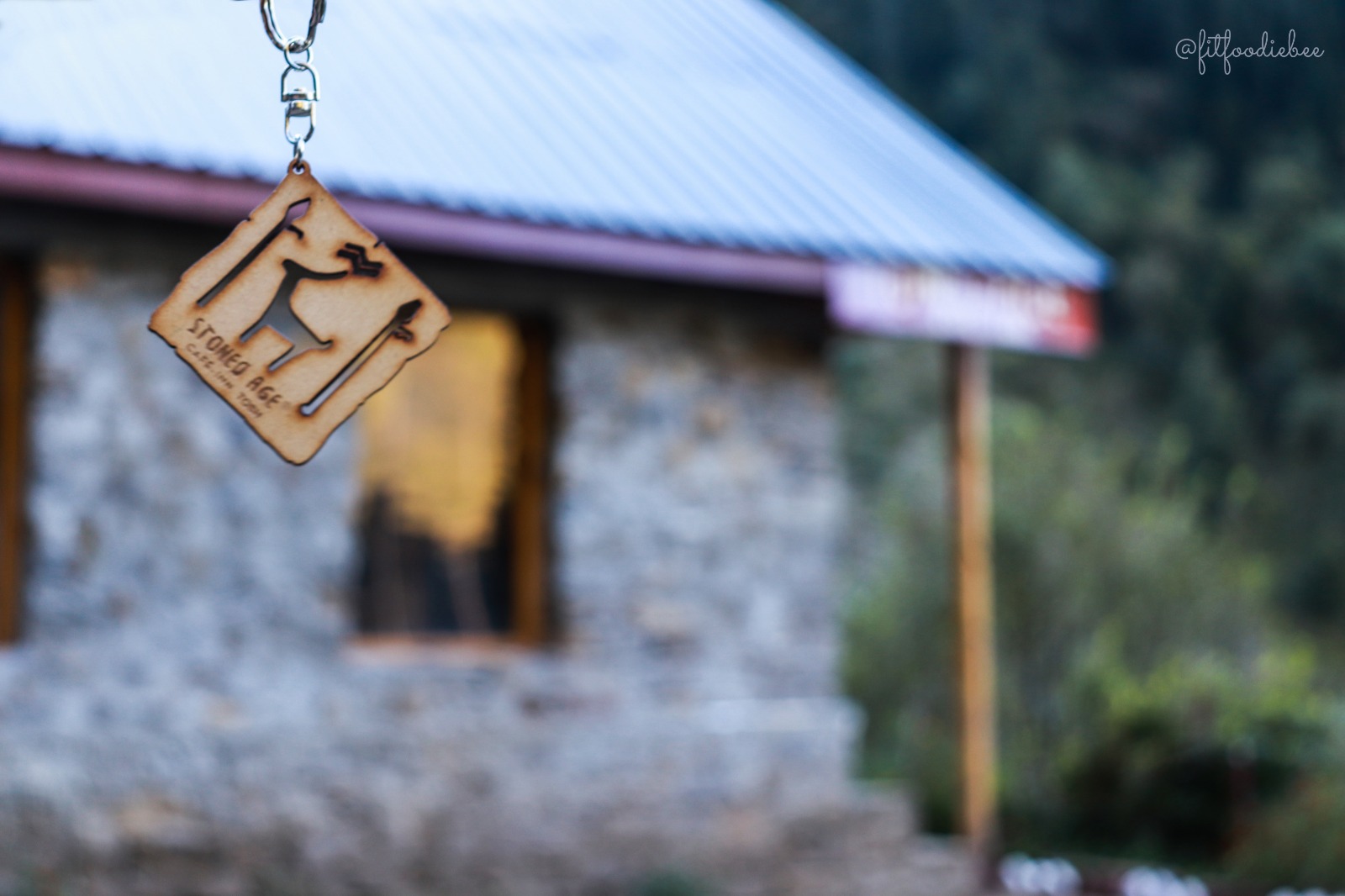
The logo — a petroglyph-style figure carved onto stone — wasn't designed in a studio. It was drawn by hand, inspired by actual rock carvings found in Himachal Pradesh's high-altitude regions. The design language across the property follows the same principle: nothing is decorative that isn't also functional, and nothing is built that couldn't have been built by hand with tools that existed before the industrial revolution.
Part of Something Larger
StonedAge sits within the Musée Living portfolio — a collection of hospitality properties across India that share a philosophy: that places worth visiting are made by people who genuinely love them, and that the best hospitality is the kind that gives guests access to something real rather than a simulation of travel.
Musée Living started in 2006 with Musée Art Café in Dehradun — Uttarakhand's first dedicated art café, which became a platform for over 500 artists over its lifetime. StonedAge carries that same DNA: art, craft, provenance, and a stubborn commitment to the authentic over the convenient.
What Stays the Same
Tosh will change. Every place does, once it's found. The question is the rate and the direction. Our commitment — the reason StonedAge exists — is to slow that change for as long as possible by building a model of hospitality that depends on the place being what it is. The moment Tosh becomes generic, we've failed.
So we don't amplify. We don't build more rooms than the land can sustain. We don't import a vibe from somewhere else. We try, year after year, to be the best version of something that belongs specifically to this mountain, this valley, this altitude.
The stone walls were here before us. They'll be here after. We're just taking care of them for a while.
The Two Posts That Started This
If you want the longer version — the one that goes deeper into what it actually took to build a hospitality business in a place with no road, and what happened in the early years before StonedAge had a name — they're on the founder's personal journal:
Nobody builds a hotel in a place with No Road. I did it anyway. →
The Call from Nowhere — The Beginning of StonedAge Tosh →