In the same season that machines learned to build worlds, we started remembering how good it feels to live in the real one.
Consider where 2026 has landed us. Scientists have now traced the complete wiring diagram of a fruit-fly brain — around 166,000 neurons and roughly 125 million connections, published in Cell in September 2026 by a team from Google Research, Janelia and Cambridge (source), two years after the first whole female fly brain appeared in Nature (source). Meanwhile, AI systems can now generate entire playable worlds from a single prompt — from a neural-network version of Minecraft with no game engine (source) to Google DeepMind's Genie 3, which spins up explorable 3D worlds from a line of text (source).
We can read a brain and write a world in the same breath — and even the people building these tools are asking us to slow down. Demis Hassabis, who runs Google DeepMind, called in early 2026 for research into AI's risks to be done "urgently," with "smart regulation" of "the real risks" (source). A former DeepMind researcher, Alex Turner, argued in a September 2026 opinion column that the field is running "an extremely dangerous race towards superintelligent AI" (reported here; the original Guardian piece is his personal view, not a news finding).
You don't have to have an opinion on any of that to feel the pull underneath it. If the smartest machines we've ever made are being asked to pace themselves, maybe we're allowed to, as well.
We named our café StonedAge as a joke about the Parvati Valley's reputation. But there's a better meaning hiding in the pun: sometimes the most advanced thing you can do is go analog.
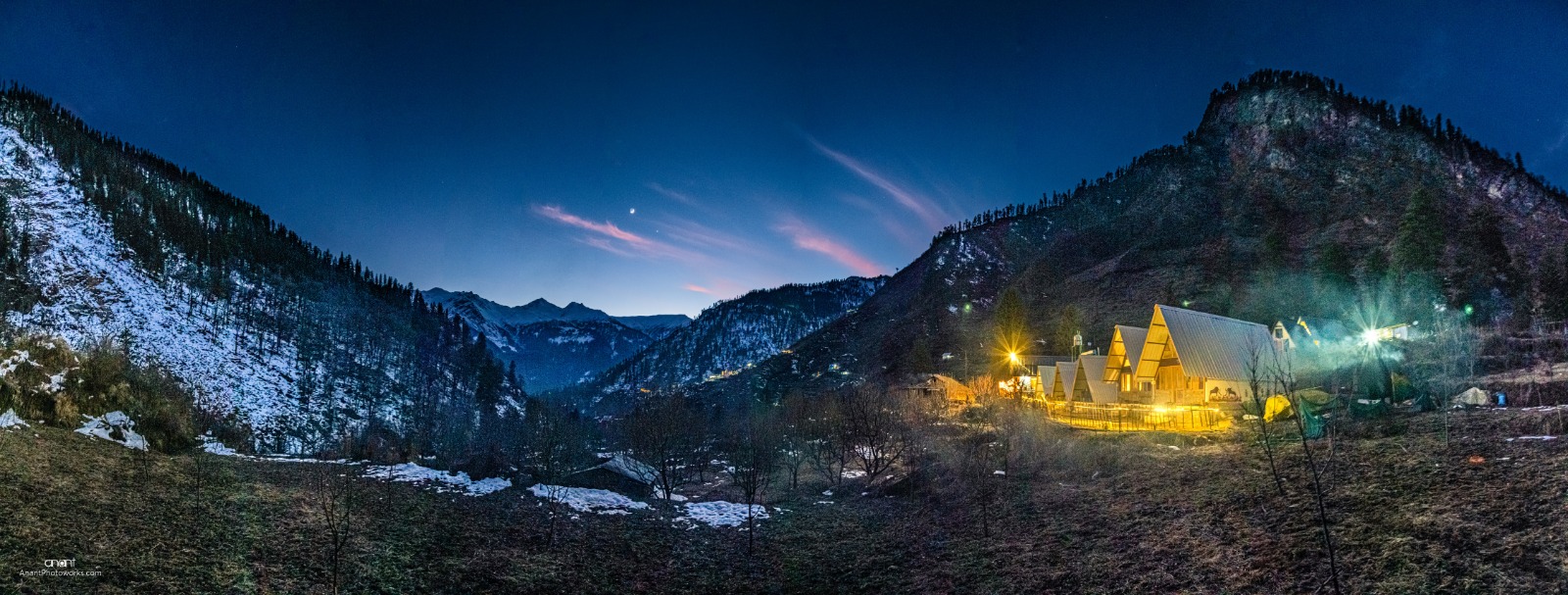
Your attention is not free — and something keeps spending it
Here is the part nobody enjoys hearing. Researcher Gloria Mark, who has studied attention for decades, found that the average time we spend on a single screen before switching has fallen to about 47 seconds (source). And once you're pulled away from a task, it takes on average around 25 minutes to return to it (source).
It gets stranger. In a 2017 study, simply having your smartphone nearby — face-down, switched off, not even touched — measurably reduced people's available working memory and fluid intelligence (source). The researchers called it "brain drain." The phone doesn't have to ring to cost you something.
(For the record, the popular line that our attention span is now "shorter than a goldfish's, about eight seconds" is a debunked myth — the real numbers above are worrying enough without it.)
"The signal dies somewhere on the walk up from Barshaini. Most guests panic for an hour, then forget they ever had a phone."
— The StonedAge Café CounterTurns out, the whole world is quietly logging off
What's happening in Tosh isn't unique — it's part of a broader analog revival that has been building for years.
-
01
Teenagers are ditching smartphones on purpose
A group of Brooklyn teens started the "Luddite Club," swapping smartphones for flip phones and paperbacks, profiled by The New York Times in 2022 (source). This from the generation that grew up online — 95% of US teens have a smartphone, and many told Pew researchers they actually feel more peaceful without it (source).
-
02
The "dumbphone" is back
Sales of basic flip phones have been climbing again, with one maker reporting its flip-phone sales doubled between 2022 and 2023 (source). People are paying money to make their phones do less.
-
03
Vinyl and film are outselling their "upgrades"
US vinyl revenue grew 7% to $1.4 billion in 2024 — an 18th straight year of growth — and vinyl records outsold CDs (source). Gen Z is rediscovering film photography, grain and all (source). The common thread: friction we choose feels better than convenience we didn't.
What the mountains do that a screen can't
This isn't just nostalgia. When researchers had people take a walk in nature versus a walk through a city, the nature group's performance on an attention task improved by around 20% (source). A large 2019 study of nearly 20,000 people found that spending at least 120 minutes a week in nature was linked to significantly better health and wellbeing (source). Tosh gives you that in a single morning.
There's a sleep dividend too. Screen light before bed is reliably associated with worse, delayed sleep — the exact mechanism is still debated, but the Sleep Foundation notes blue light can suppress melatonin and push back your body clock (source). At 7,874 feet with nothing glowing on your nightstand, guests routinely tell us they've slept better than they have in years.
And there's a newer, quieter cost worth naming honestly. Early, preliminary research from MIT suggests heavy reliance on AI writing tools may leave people with weaker recall and engagement with their own work — the authors call it "cognitive debt" (source). A separate OpenAI–MIT study found higher chatbot use correlated with more loneliness for a subset of heavy users (source). Both are early and correlational — not a verdict. But they point the same way the mountains do: the human parts of us need to be used, or they get quieter.
A field guide to going properly offline
You don't need to throw your phone in the Parvati river. A few things help:
- Let the signal do the work. Coverage fades on the 3 km walk up from Barshaini. Don't fight it — treat the dead zone as the point.
- Give it three days. Most people report the real shift on day three, once the reflex to check finally lets go.
- Bring analog. A paperback, a notebook, a real camera. Something with grain and no notifications.
- Trade the feed for the glacier. The view from the café doesn't refresh, and somehow that's exactly why you can't look away.
If you're planning it, our guides on the best time to visit Tosh and what not to miss when you're here will help you pick your window. And if you want to know why we built a café and inn at the literal end of the road, that's our story.
The machines will keep getting cleverer. They'll map more brains and dream up more worlds. Let them. Some of us will be up here, at 8,000 feet, watching a glacier not move — remembering that being present was the original technology, and it still works.
Frequently Asked
Is there phone signal and Wi-Fi in Tosh?
Coverage is patchy and often absent — that's part of the appeal. StonedAge keeps a Wi-Fi point for essentials, but most guests find the signal fades on the walk up from Barshaini and simply stop reaching for their phones within a day.
How long should a detox be to feel a difference?
Most people report the shift by the third day. Even short breaks help — research links just 120 minutes a week in nature to better wellbeing — but a three-to-five-day stay gives your attention room to properly reset.
What do you actually do here without screens?
Walk to the glacier viewpoint, read, write by hand, day-trek to Kutla or Kheerganga, share long meals at the café, and sleep deeply. The point isn't a packed itinerary — it's having nothing you must do.